
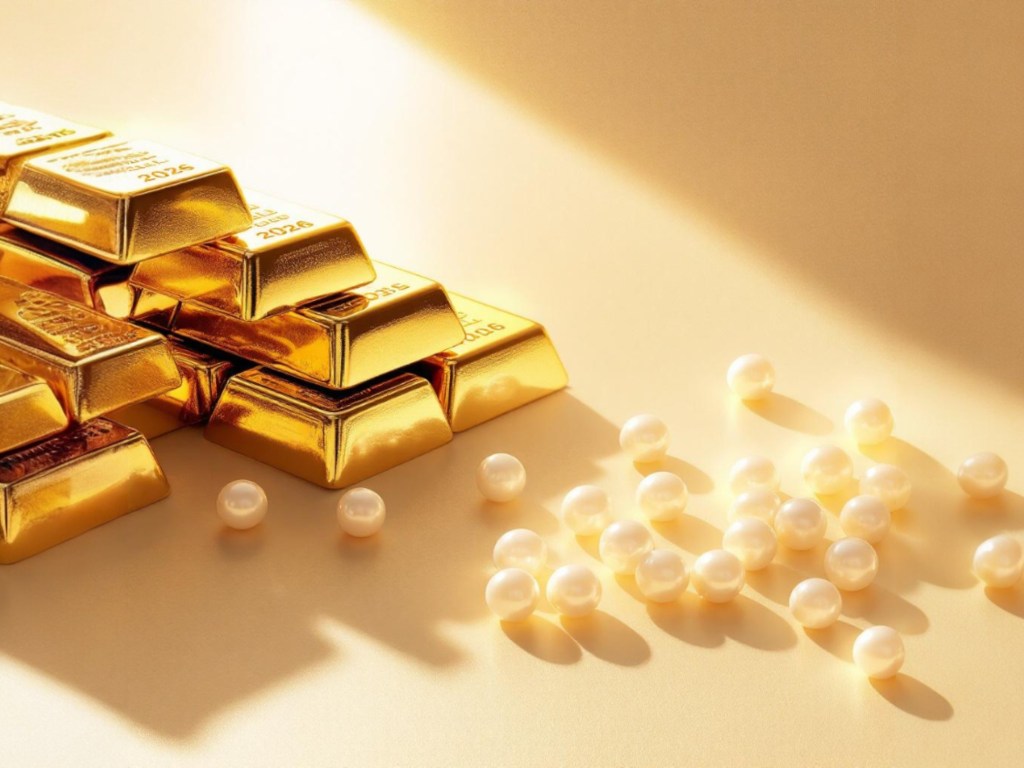
Gold Is Expensive — Pearls Don’t Have to Be
Gold prices entering 2026 remain historically high, putting pressure on both retail pricing and inventory investment. Heavy gold pieces require larger upfront buys, higher ticket prices, and often slower turns.
Pearls, by contrast, deliver perceived luxury through quality, rarity, and craftsmanship — not ounces of metal. Mastoloni Pearls focuses on sourcing and curating the finest strands to ensure each piece speaks for itself.
A beautifully matched Mastoloni strand, a pair of exceptional studs, or a modern pearl pendant can sit at compelling price points while still offering strong margins. Retailers can present meaningful fine jewelry options without forcing the consumer into sticker shock driven by gold weight alone.
Pearls Offer Margin Stability
Pearls allow retailers to protect margin in a way many other categories no longer do.
Because pricing is driven by factors like luster, surface, nacre, and matching — not daily commodity fluctuations — pearls are less exposed to the volatility seen in precious metals. Mastoloni Pearls provides consistent, high-quality inventory that helps retailers maintain margin stability.
This stability is especially valuable in 2026, as consumers remain value-conscious but unwilling to compromise on quality.
A Repeat Buyer Category
Pearl customers don’t stop at one purchase.
A first Mastoloni strand often leads to earrings, then a pendant, then an upgrade. Few fine jewelry categories encourage this kind of progression. Pearls build loyalty because they feel personal, wearable, and emotionally driven rather than purely transactional.
When sales associates are trained to explain why one Mastoloni pearl costs more than another, customers buy with confidence — and come back.
Design Versatility Meets Modern Demand
Today’s pearl buyer is not looking exclusively for tradition.
Designers are integrating Mastoloni pearls into everyday fine jewelry: smaller South Sea pearls, baroque Tahitians, and high-luster freshwater pearls paired with lighter gold settings. This flexibility allows retailers to maintain a fine-jewelry aesthetic while controlling metal costs.
Pearls complement gold — they don’t compete with it.
Why Retailers Should Revisit Pearls Now
Pearls in 2026 reward intention.
Retailers who curate selectively, focus on quality over volume, and invest in education are seeing Mastoloni Pearls perform as a core category — not an afterthought. In a market where gold-heavy inventory carries real risk, pearls offer balance, beauty, and profitability.
They may not be the loudest category in the case, but Mastoloni Pearls proves they are quietly one of the smartest.



 Anthony The Pearl Guy
Leave a comment